
I drink bottled water when I travel and at restaurants. So I was curious what is the best bottled water? But otherwise I always drink filtered water. Always! Check out the water filters I recommend here.
You can read this article which describes the criteria I consider in deciding which bottled water is the best or you may want to just see my suggested list by clicking the button to the right.
These bottled water recommendations are the result of extensive research – by me. These are the bottled water brands I drink. That is what brought you to this page after all:



I use These Criteria To Choose The Best Bottled Water
What are the different types of bottled water?
The first thing you have to know is that there are various kinds of bottled water and these are not directly comparable to one another. The International Bottled Water Association provides the following description of different water types on their website:
The International Bottled Water Association (IBWA) website states (1):
The ‘FDA has established a bottled water Standard of Identity to define the several different types of bottled water based on specific characteristics of the product. Bottled water products meeting the Standard of Identity may be labeled as bottled water or drinking water, or one or more of the following terms:
Spring Water – Bottled water derived from an underground formation from which water flows naturally to the surface of the earth. Spring water must be collected only at the spring or through a borehole tapping the underground formation feeding the spring. Spring water collected with the use of an external force must be from the same underground stratum as the spring and must have all the physical properties before treatment, and be of the same composition and quality as the water that flows naturally to the surface of the earth
Purified Water – Water that has been produced by distillation, deionization, reverse osmosis or other suitable processes while meeting the definition of purified water in the United States Pharmacopoeia may be labeled as purified bottled water. Other suitable product names for bottled water treated by one of the above processes may include “distilled water” if it is produced by distillation, deionized water” if it is produced by deionization or “reverse osmosis water” if the process used is reverse osmosis. Alternatively, “___ drinking water” can be used with the blank being filled in with one of the terms defined in this paragraph (e.g., “purified drinking water” or “distilled drinking water”).
Mineral Water – Bottled water containing not less than 250 parts per million total dissolved solids may be labeled as mineral water. Mineral water is distinguished from other types of bottled water by its constant level and relative proportions of mineral and trace elements at the point of emergence from the source. No minerals can be added to this product.
Sparkling Bottled Water – Water that after treatment, and possible replacement with carbon dioxide, contains the same amount of carbon dioxide that it had as it emerged from the source. Sparkling bottled waters may be labeled as “sparkling drinking water,” “sparkling mineral water,” “sparkling spring water,” etc.
Artesian Water/Artesian Well Water – Bottled water from a well that taps a confined aquifer (a water-bearing underground layer of rock or sand) in which the water level stands at some height above the top of the aquifer.
Well Water – Bottled water from a hole bored, drilled or otherwise constructed in the ground, which taps the water aquifer.’
As you can see, the differences vary widely. The typical consumer may be familiar with Perrier, which is a sparkling water, Arrowhead or Poland Springs, which are popular spring waters, or the Coke and Pepsi brands of ‘highly purified’ tap water.
So Which Bottled Water is Best?
 The second issue might be to qualify the discussion of what the word ‘best’ means. That word could mean different things to different people. For instance when I ask Michael Mascha, publisher of FineWaters, about publishing this article he responded with, “I have a hard time determining which is the best water as I enjoy especially the difference in waters. It would be similar to ask what is the best wine or chocolate. The range is the beauty.
Having said this I think it is important that the waters fall into a certain set of ranges in order to be drinkable.” To some consumers like Michael, best might be found in a particularly delightful taste. Others might be drinking bottled water to achieve specific health benefits not found in untreated tap water. Many people in the U.S. today are drinking bottled water because of a growing fear of the contaminants in tap water. To be completely fair and unbiased one must allow each individual to determine what they mean when referring to their favorite bottled water.
For the purposes of this discussion and my particular clientele I want to focus on the issue of health. Increasingly there are growing concerns about the leaching of pthalates, known endocrine disrupters, as well as antimony (2) from water in plastic bottles. Another concern is nanoplastics. Still Other concerns include bacteria. The Natural Resources Defense Council compiled an extensive list of test results from bottled water they collected and sampled. (3) Other health concerns that pertain to bottled water include the physical characteristics of the water, including pH (acidity) and the presence or absence of minerals.
For the sake of comparison I’ve compiled the following chart of the pH and mineral content of some popular spring and mineral waters:
| Arrowhead | Poland Springs |
Fiji | Calistoga | Evian |
San |
Rising |
Volvic | Perrier | |
| pH | 6.12-7.6 | 6.02-7.6 | 7.5 | 5.84-6.71 | 7.18 | 7.7 | 9.0 | 7 | 5.46 |
| Calcium | 6-53 | 3.7-8.2 | 17 | 6.0-8.4 | 78 | 208 | 10 | 147.3 | |
| Chloride | .73-8.2 | 1.9-8.8 | .74-2.6 | 2.2 | 74.3 | .7 | 8 | 21.5 | |
| Bicarbonate | 42-190 | 7.2-20 | 36-44 | 357 | 135.5 | 65 | 390 | ||
| Fluoride | 0.05-1.2 | .052-.20 | Nd | .52 | 1.3 | 0.12 | |||
| Magnesium | 1.5-20 | .76-1.4 | 13 | 1.5-2.9 | 24 | 55.9 | 6 | 3.4 | |
| Nitrate | .05-.75 | .13-.75 | .06-.57 | 3.8 | .45 | 1 | 18 | ||
| Potassium | 0.7-4.4 | .59-.74 | 1.8-3.8 | .75 | 2.7 | 6 | 0.6 | ||
| Sodium | 2.1-20 | 2.4-4.7 | 3.8-9.5 | 5 | 43.6 | 19.3 | 9 | 9 | |
| Sulfates | .64-32 | .81-5.1 | Nd 2.1 | 10 | 549.2 | 6 | 7 | 33 | |
| Tds | 81-260 | 26-60 | 210 | 54-100 | ? | 1109 | 59 | 109 | 475 |
| Type source: (4) |
spring | spring | artesian |
sparkling |
still |
sparkling |
mineral spring | spring | sparkling mineral |
Again one can observe a wide range of variation among different waters. That begs the question from a health perspective what set of physical characteristics is ideal? I would venture to suggest that a pH of 7.4 to 7.6 is ideal. This is the pH of human blood and optimum for drinking water. Some people prefer to drink highly alkaline water, in the range of 8 or 9. And while some people may enjoy the taste of low pH acidic water some health advocates and practitioners suggest that acidic drinks and foods contribute to increasing the body’s vulnerability to disease. (5)
Additionally there is some evidence from a number of studies funded by the World Health Organization (WHO) that people who drink water containing minerals experience lower rates of disease than those who drink water with the minerals removed. (6) I must note that my analysis of these studies does not find such a connection to be valid. Of specific concern are the presence of calcium and magnesium in water. Both contribute significantly to an individual’s health. One Canadian study compares the mineral content and potential health effects of minerals in water. (7)
The WHO debate has caused the Water Quality Association (ie: the US water treatment industry) to hold discussions about the health impacts of removing minerals through both the Reverse Osmosis and Water Softening technologies. A recent seminar discussed the benefits of adding these two minerals back into water after treatment. When I prescribe reverse osmosis treatment for my customers I always recommend a post membrane calcium filter. This provides calcium but perhaps more importantly increases the pH of otherwise acidic RO water. This may be why Coca-Cola adds magnesium (epsom salts) to its RO treated Dasani water.
Total dissolved solids (tds) is the sum total of all the minerals in water. While minerals are desirable there is a range of suitability. Since tds is comprised of a number of substances, high levels will affect the taste of water and may also affect toxicity. (8) Generally, a low tds is considered by some health practitioners to be more hydrating. EPA has set it’s Maximum Contaminant Level for tds in drinking water at 500 mg/l for aesthetic purposes. Water with a very low tds, say 30 or less, will have a sharp crisp taste, perhaps considered ‘clean’ by some. A higher tds, in the range of 150 to 250, provides more ‘mouth feel’ or ‘taste’.
Returning momentarily to the issue of preference, some people may enjoy the distinct flavor of the mineral waters such as Perrier or Pellegrino. It is the high tds and high sulfates that contribute to the unique taste. I personally prefer a water (tap or bottled) with a tds in the range of 40 to 225.
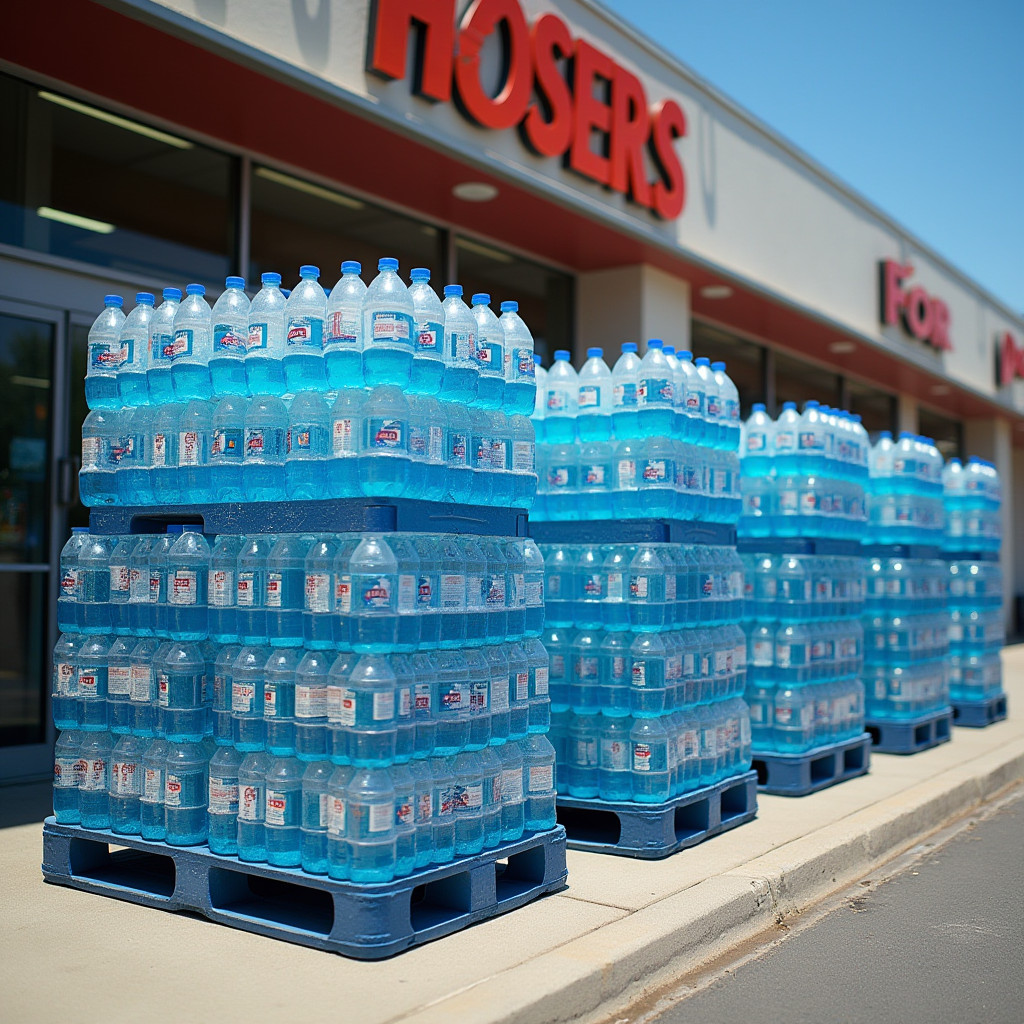
The heat will cause the plastic to contaminate the water
There’s another issue of importance from an environmental perspective. That’s the issue of transportation energy. Ideally, consumers should choose water produced locally. It has been said that it takes a quart of oil to import one bottle of Fiji water. (9) That’s a ridiculous waste of energy. A responsible consumer has to consider the transportation costs of using any particular product. Ideally, you’ll drink local water.
A final point is appropriate to this discussion. I drink bottled water when I’m away from home or on the road. Most public water supplies are of similar quality to bottled water. The differences may be quite minor with the notable exception of the presence of chlorine or chloramine and their carcinogenic byproducts. Drinking chlorinated tap water has been linked to increased rates of cancer. (10) Other specific and potentially harmful contaminants may also be present. With appropriate treatment most tap water can be made to be of equal or higher quality than any of the spring waters and certainly than any of the ‘highly purified’ bottle waters available in the marketplace today. There is no reason you can’t have bottled water quality in your own home. The key is in the treatment. To read an article I’ve written on the various types of tap water you may visit What Kind of Water Should You Drink for Optimum Health.
When I pick bottled water I look for a spring water to obtain beneficial minerals in moderate amounts with a pH of 7.4 or higher. And, if it’s available, I’ll choose a glass container over plastic to avoid the possibility of leaching. You can choose the bottled water that suits your purpose, whether that’s to experience a delightfully unique taste to compliment a fine dinner or a healthy and environmentally appropriate choice.
Discover which bottled water brands provide you with the best, healthiest water.
Save time and assure yourself of the safety of the bottled water you drink.
I believe that the best bottled water has specific physical characteristics and no contamination.
These bottled water recommendations are the result of extensive research.
You can experience healthy water in your own home...
Some environmental groups suggest drinking tap water instead of bottled water. That is bad advice. Tap water contains numerous poisons. I never drink unfiltered tap water. Never!
But, you can’t jump online and buy the right water filter. First, you have to know what’s in your water. Then you can buy the filter that removes the contaminants in your water. And water is not the same from town to town.
If you’d like to buy the right kitchen water filter or water purifier which will produce healthy water at your tap, start by finding your local water report and identifying the specific contaminants and physical characteristics of your water.. When I prescribe a water treatment system for my customers, I review their water quality report and then tell them what I would choose for my own family. My major concern and that of my customers is drinking healthy water.
To learn more about my approach to providing you with healthy water read Which Water Filter Is The Best?
To learn more about the kitchen water filters I provide go here: Sweetwater’s Kitchen Water Filters
Learn how to make your tap water taste great and be healthy.
Avoid the Mistake Most People Make Click here to sign up for my FREE E Course: Five Steps to Healthy Water
I guarantee it!
or
Click here to Purchase My Ultimate Guide To Selecting The Perfect Water Treatment System
for just $14.95…
“I just had my Kitchen Defender installed. It’s FANTASTIC! After flushing the system for a good 20+ minutes I am excited to say I LOVE THIS WATER.”
Pam Velez, Tampa FL
Click here for Sweetwater’s Kitchen Defender specifications and pricing
Remove radioactive iodine-131 with Sweetwater’s Custom Reverse Osmosis Click here for specifications and pricing
“We provide a detox program in our office and after investigating many water filter systems that would comply with the standards we have provided for our patients – yours: the Kitchen Defender has lived up to all its expectations and our patients have all noticed the pleasant difference in our water…”
Dr Ilan Bohm, Director Office of Integrative Medicine NYC , NY
Jim McMahon is an ecologist with over 30 years experience, some twelve plus years dealing with various water quality issues. It was his work on river restoration and protecting endangered fish that led him to realize what we’ve done to our water. He provides water treatment equipment and consulting services to individuals and businesses throughout the U.S., working from his home overlooking a headwaters stream in Brookside, Utah. Learn more about my products and services: Sweetwater’s Home Water Purification Systems
“Dear Jim, you make me realize in a special way how our happiness depends on direct human relationships, with nothing standing in the way between full and honest communication of what knowledge each of us has. Bless your enterprise.”
Russell DuPree, Freeport, Maine
For a free pdf of this article, click here: Which Bottled Water Is the Best?
Article References
1) Frequently Asked Questions. International Bottled Water Association. 25 Feb 04. Accessed: 1 May 07.
(2) Smith, Cameron. “Bottled Water Questions.” The Toronto Star. Mar. 18, 2006. 01:00 AM Excerpt: ‘Shotyk is director of the Institute of Environmental Geochemistry at Heidelberg University in Germany, and has just published research establishing that the plastic containers commonly used for bottling water leach antimony into the water. . . ’
(3) “Appendix A: SUMMARY OF NRDC’S TEST RESULTS, Bottled Water Contaminants Found.” Natural Resources Defense Council. Accessed: May 1, 2007
(4) Chart compiled from public data supplied on the websites of each of these bottled water companies.
(5) Tunsky, Gary. The Battle Over Health is About pH, New Century Press: Jan 05
(6) McMahon, James P. https://cleanairpurewater.com See my resource library
(7) Azoulay, Arik, Garzon, Phillipe, and Mark J. Eisenberg. “Comparison of the Mineral Content of Tap Water and Bottled Waters.” Journal of General Internal Medicine. 16 May 01. Accessed: 1 May 07.
(8)“Total Dissolved Solids.” Wikipedia. 2 May 07
(9)“FIJI Water.” Wikipedia. 1 May 07. Accessed 1 May 07.
(10)Villanueva, Christina M., et al “Total and specific fluid consumption as determinants of bladder cancer risk.” Accessed 2 May 07. (link no longer present)
Search
Contact Jim
- 866-691-4214
- 970-259-2171
- Mon - Fri, 9 - 5, Mountain Time
- Monday - Friday
- jim@cleanairpurewater.com
Follow us
Products
Well Water Systems Well water purification systems and well water tests to meet YOUR needs
Kitchen Defender the very best water filter to remove chloramine and fluoride
Urban Defender® The most effective whole house water filter
Air Purifier. The air purifier uses ions
to remove particles from indoor air
Free E-Course
Five Steps to Healthy Water
Are you looking for a home water purification system or a kitchen water filter and wondering how to find your way through all the hype?
Avoid the Mistake Most People Make
Learn how to buy the correct water purification system or water filter.
SIGN UP FOR MY FREE E Course:
Get The Newsletter
Sign up for updates and special offers!
Thank you!
You have successfully joined our subscriber list.
Sign Up For The Water For Life Email List
Signup for news and special offers!
Thank you!
You have successfully joined our subscriber list.
I Guarantee It! (I hate spam too and I DO NOT sell or rent your email)
Great Tasting Healthy
If you're ready to have great tasting, healthy water here's what to do:
Obtain a copy of your city's annual water quality report (also known as a Consumer Confidence Report)
Here's how to find it:
Finding Your
Water Quality Report
or call me and we'll find it together online and discuss how to achieve healthy water for your family.
866-691-4214
I provide the home water purification systems, water filter, water purifier, or well water filter system that will meet your needs.
or
if you’d like to resolve your water purification issues all on your own and still be sure you’re making the right choice, you can….
Purchase My
Ultimate Guide To Selecting The Perfect Water Treatment System for just $14.95
Product Reviews
The iron system is fine; our water is clean and the toilets aren’t stained. My bride is happy! As a matter of fact, the system seems to have had a softening effect on our water – a fringe benefit we hadn’t expected but are happy to have.